Tag Archives: How to Write

First you tell them; then you convince them.

Quotative Like; xkcd.com

Some  common writing styles are very bad for grant applications and this post aims to help you to avoid one of the worst.  It is a style of writing that we refer to in the Research Funding Toolkit as “Argue – conclude”.

Argue-conclude writing sets out the argument for a statement before it makes the statement.  Done well, argue-conclude writing can be very convincing for a dedicated reader,  who will follow every twist and turn of  your argument. By the time they get to read a statement that ordinarily they might be inclined to reject, they already know the arguments that support it. Unfortunately, most of the readers who will decide whether your grant application gets funded are less dedicated. They will give up reading before they get to the crucial statement.

To communicate with these readers, you begin each paragraph with its main message. Then use the rest of the paragraph to convince them that the message is true. In the Research Funding Toolkit we refer to this style as “assert-justify“. An easy way to describe assert-justify style is “Tell them; then convince them”.

As I was writing this I thought of nine reasons you should adopt “Assert-justify” style in research grant applications.  The first four are concerned with meeting the needs of the reader – one of the guiding principles for writing with style. The remaining five are concerned with making the task of writing easier. Naturally I shall assert each reason and then justify it.

  1. Assert-justify style communicates more effectively with speed-readers, tired readers, and lazy readers.
    These readers will skim through your document. The neurology of eye-movements dictates that, provided you put blank lines between the paragraphs, their eyes will skip from paragraph to paragraph. They will read the first line of each paragraph. Thus they will read the assertions and get the headline messages. If they are inclined to disagree with the headline messages, they will dig down into the arguments that justify them.
  2. Assert-justify style makes it easier for diligent readers, such as referees, to examine your arguments in detail.
    Each paragraph starts by stating what the paragraph is about. This makes it very easy for the reader to find the arguments they want to examine. They never face the problem of wading through an argument wondering where it is leading.
  3. Assert-justify style makes it easier for the committee-member who has to present your grant to the rest of the committee.
    They can see at a glance what points you are trying to make. This makes it very easy for them to select the points that are most important and relevant for the committee, even if they don’t entirely understand them.
  4. Assert-justify style is more likely to engage readers who are bored.
    The conclusion is always the most interesting part of the argument. By putting the conclusion first you are more likely to entice them to read.
  5. Assert-justify style makes it easier to write an accurate summary.
    The assertions from each paragraph comprise a draft summary. If you want a shorter summary you may be able to leave some of them out.
  6. Assert-justify style makes it easier to write a good introduction.
    The assertions from each paragraph comprise the core of the introduction. You may need to add some linking text and some signposts.
  7. Assert-justify style makes it easier to write short sentences.
    You can write in simple, clear statements. You don’t need to frame them and qualify them.
  8. Assert-justify style makes it easier to write short paragraphs.
    In argue-conclude writing you have to spend a lot of words preparing the ground for the argument. If you start by asserting the point you want to make, you leap straight into the argument without spending any words.
  9. Assert-justify style makes it easier to write.
    I used to spend a lot of time staring at my screen wondering how to get started on each section. In assert-justify writing you can write the ten key sentences that start each sub-section of a grant proposal in an hour.

There are probably more and better reasons to write in assert-justify style.  When I started writing this post, I only had three!  If you have any doubts about whether assert-justify style is correct, it may help you to know that some time after writing this post I discovered a tenth reason: courses on English for academic purposes advise that every paragraph should contain a sentence that states the message of the paragraph, the topic sentence, and that it should usually be the first sentence.

Let me finish with an example of what I think you should avoid. This abstract of a funded grant application is short and clearly written but it is in argue-conclude style; consequently the piece of information that the reader most wants to know – what will the research project do – is buried away in the second half of a sentence in the last paragraph. A speed-reader would not see it.
Committees and Referees

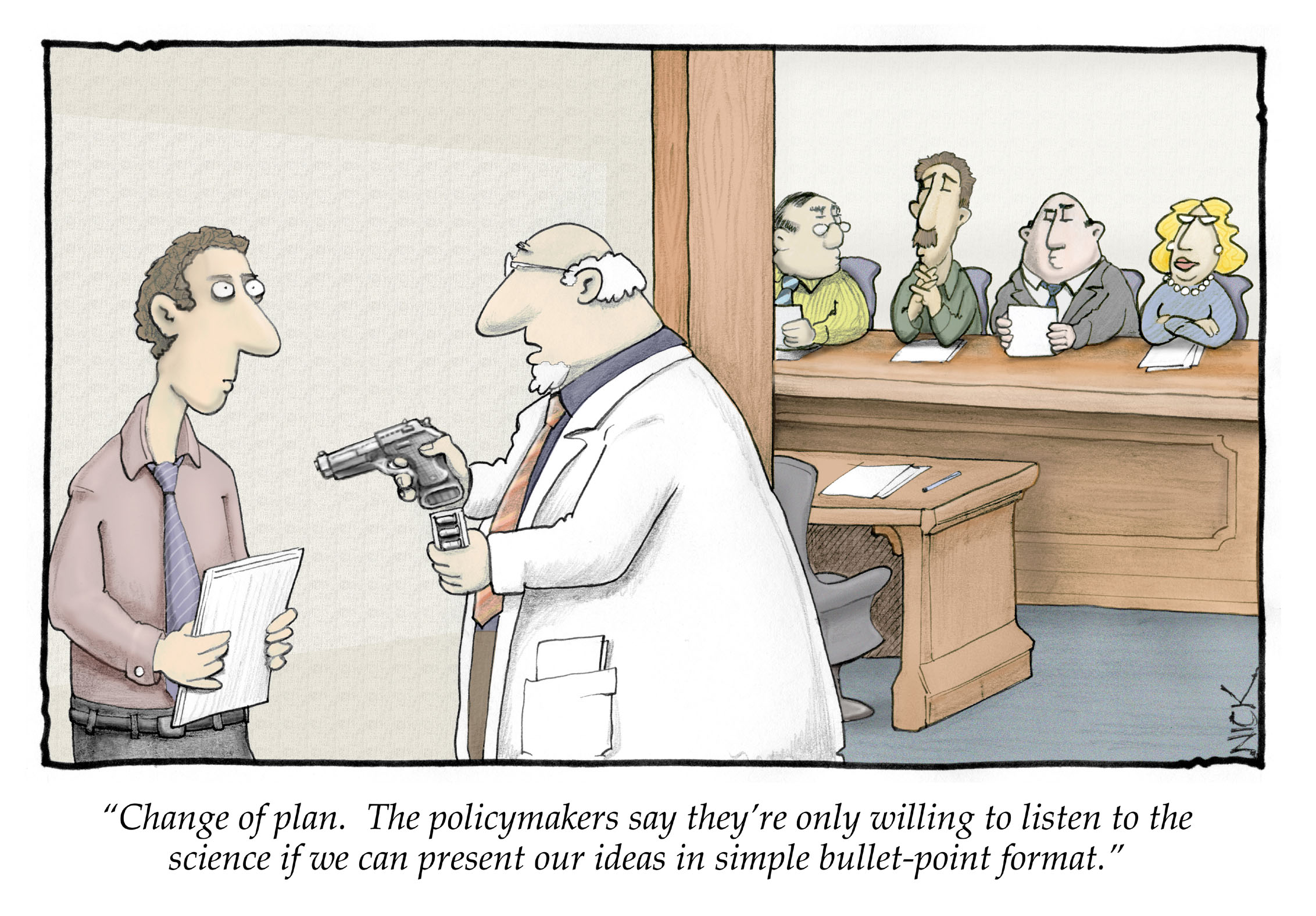
Committees Like a Simple Story: thanks to Science and Ink http://www.lab-initio.com

Committees prefer a clear story: http://labinitio.com

The Journal Nature reported yesterday that scientists have complained that there is a mismatch between expert referees’ evaluation scores of research grant applications and funding decisions.  Different interviewees claimed that this mismatch either does or does not indicate either a flaw in the system or mistakes by referees or by committees.

There may be flaws in the system and mistakes probably happen, but there is a more obvious reason that referees’ scores should not be expected to predict funding decisions. Referees and committees do different jobs which impose different constraints on the way a grant application is written. Very few proposals are written in a way that satisfies both sets of constraints, and so, for the majority of proposals, there is no reason to expect a close match between the referees’ score and the committee’s score. Before I explain the constraints and how to meet them, I’ll clarify the story and explain its relevance.

The story was based on 302 grant applications to the Medical Research Council. It states that some applications that received high scores from the referees were triaged (rejected without being discussed by the committee). Of the proposals discussed by the committee, the story states that the group of applications that were successful and the group that were rejected had ‘a nearly identical spread of scores’. It’s worth noting that the story focuses on a statistic of the scores that is not particularly informative (spread) and does not mention any other statistics. It is relatively common that the referees include both friends and foes of the applicant, which can cause the spread of scores on a single application to range from the lowest to the highest possible. Consequently, nothing that the story says about this rather small data sample indicates a general failure of referees’ scores to predict committee decisions.

However, whatever we may try to conclude from this small dataset, most funding agencies (the EPSRC is an exception in the UK) ask referees and committees to do very different jobs. These jobs depend on different aspects of the way the proposal is written.

Referees work alone and each one works on a single application. The referees are expected to be experts in the same research field as the applicant and their evaluations are typically seen as coming from within that field. Their main task is to test the detailed rationale of the proposal. Are the research questions important? Is the research approach feasible? Does the research team have the ability to carry out the project? What is their standing in the field? Has their previous work made a significant contribution? Is the approach novel? Are other teams likely to get the answers first?

To get a good score from a referee, a grant application must contain relevant detail. Evidence that the questions are important and relevant must be cited. Any evidence to the contrary must be dealt with effectively. The research approach must be described clearly and in sufficient detail to convince a knowledgeable sceptic that the project is feasible, can be carried out with the resources requested, and will lead to the promised outcomes.

The committee works as a collective and takes a view across all the applications before them, typically about 100 for a single meeting. They must also take a view across all the different research fields that the committee supports. They need it to be clear that the project will deliver an  outcome that will have importance beyond the immediate research area and that the applicant has identified an approach that is likely to be productive and that the research team has the skills to deliver it. They need to know what the research aims are and how they relate to the overall outcome. They need it to be clear that the research objectives will satisfy the research aims and deliver the overall outcome and that the results will have appropriate impact

More importantly, the committee also works very quickly. They have to reach an agreed view about grant applications which most or all of them may not understand completely. For the committee to score an application highly they need it to be possible to understand it on the basis of a single hasty reading – or even a quick skim. The case for support should have a very clear structure that states clearly what will be the research outcome, why it is important, what are the research aims, what are the objectives and what will be done with the results.

Of course the best possible case for support has a clear structure that enables the committee to understand it and appreciate its strong points. It also uses the structure to guide the referees to the relevant detail. In my experience cases of support written in this way get very high scores both from referees and from committees. Unfortunately they are very rare but this blog explains in several different ways how to write them.


Build the Project, Then Fit the Question

Was your question clearly linked to your project?

Is your question important to the funder?

The first thing you must do in a grant application is convince the reader that you are going to address a question that is important to the funder. Your grant will definitely not get funded unless you convince the reader that your research question is important to the funder. Even so,  you should take a project first approach. Generate your project and then fit the question to it. Do not try to pick an important question and then design a project to solve it. The project first approach is quicker – often by several months – and it reduces the risk of writing a zombie grant.

The project first approach is easier if you take a modular approach to project design and start by generating a catalogue of sub-projects.  As you generate each sub-project, you should ask  yourself if the outcome will contribute to answering an important question. If it will, keep the sub-project and begin preparing yourself to make that case. Otherwise, discard that sub-project and try  to generate another one with an outcome that will contribute to answering an important question.

Once you have a few sub-projects – ideally at least five or six – it is easy to generate projects. The ideal project has three, or just possibly four, sub-projects.  When you combine sub-projects to generate a project you need to start looking hard for a good research question. You need a question that covers all  of the sub-project outcomes comfortably. It is better to take a question that is too big to answer, and answer it partially, rather than risk picking a question that is too small to be exciting and answer it completely.

An important part of your development as a researcher is to develop the ability to design projects that produce results that help to answer important questions. I absorbed this from the culture of the lab in which I did my PhD and this is part of the approach we recommend in the book. However, it is also possible to search on the web to see if a given funder will fund the kinds of research outcomes you are likely to produce.  Obviously every funder’s website will have a statement of their remit, but this can be hard to interpret because it will be couched in terms of questions rather than outcomes. A better way to get a sense of the outcomes that excite a given funder is to scan their press releases. Best of all, some funders have a database that includes the abstracts of all their funded projects.

The Gateway to Funded Research is a searchable database that covers  all the UK research councils. The Projects and Results page on the European Research Council website is also searchable and allows you to see research outcomes.

A simple answer to a simple question

lab-initio.com astrophysicsmadesimple

Try to write a simple answer in one sentence

Last week I was a rather noisy fly on the wall in a workshop run by Sara Shinton to help  post-docs prepare for fellowship interviews. Sara pointed out that many institutions, including Glasgow University, which is where the workshop took place, have developed extensive support programmes for would-be fellows and will arrange a mock interview if you give them sufficient notice.

We also worked out a simple 10 minute exercise you can do to set yourself up to perform well in the interview. The key, if, like me, you have a tendency to be nervous, is to prepare and to learn a really good answer to a question that almost always crops up at the start of the interview. The question is very simple: Could you tell the committee a little bit about your project. Preparing a good answer to this question is a bit more difficult, but the exercise helps a great deal.

It is best to work with a colleague, someone who is preparing for an interview or writing a project grant themselves is ideal. It’s best if you don’t know too much about their research. The exercise is very simple. Spend exactly 4 minutes asking your friend about their project – you need to find out

  • What will the project try to achieve?
  • Why would that achievement be important?
  • How will the project try to achieve it?
  • Why is your colleague a good person to lead the project?

At the end of 4 minutes switch roles so that your colleague questions you about your project. Then you both write one sentence about each project. Spend 1 minute on the sentence and try to  give a simple overall statement of what the project will achieve, ideally you will relate that achievement to a big important problem and will also include something distinctive about how the project will achieve it in a way that will make it clear that the PI is a suitable person to do the project.

The sentence you need is something like key sentence 1.  You probably want the language to be a bit less formal than you would write in an application because you want to speak it. An ideal sentence would have a structure like this one:- “I’m going to identify potential treatments for stroke by testing compounds that we have found to inhibit brain metabolism in tissue culture”. It does 3 things.

  1. It says that you are working towards something pretty important, a treatment for stroke. It makes it clear that you don’t expect to get there by saying ‘potential‘. Everyone knows that the road from ‘potential treatment’ to ‘treatment’ can be a long one.
  2. It uses the phrase ‘we have found’ which says that you are working with compounds that you have worked with before. This establishes that you have credentials to do the work.
  3. It says that you are going to be testing metabolic inhibitors in tissue culture, which gives a sense of the kind of research you will be doing and the kind of drug that might be developed as a result.

The ideal sentence will have about 30 words. The example I have given has 23. We discovered that some of the workshop participants can write very long and very complex sentences in a minute. We also found that it’s often easier to write a good and convincing sentence about someone else’s project than about your own. Often you can make a really strong sentence by combining phrases from your sentence with phrases from a sentence produced by someone who knows much less than you do about the technicalities.

Dealing with rejection 2: Salvage.

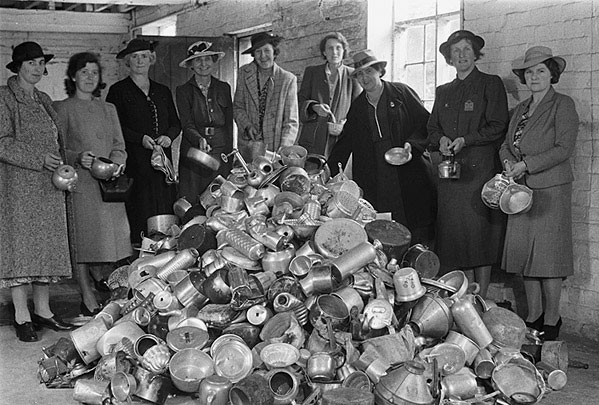
Collection_of_scrap_aluminium_in_Welshpool_by_the_Womens_Voluntary_Service_(8559465818)

Salvage is the only way forward after rejection.

The most difficult aspect of grant rejection, apart from not having a grant of course, is that your motivation to write new applications evaporates. That’s why it’s even more important than working out what was wrong with your rejected application to salvage what you can from the rejected application and start putting together a new one.

It is of course important to take the opportunity to learn what you can about what was wrong with the rejected application and I wrote about how to do that last week. However, whether or not you learn anything from it, you must come to terms with the fact that your rejected application is dead. Yes, dead. I’m sorry, I did say dead and I do mean dead. Mourn its passing but do not imagine that editing will reanimate its corpse. Use your editing pencil instead to mark useful parts to salvage and recycle.

 Salvage the Sub-Projects One at a Time

The most important part of the case for support is the description of the project. This should be at least half the case for support and it should be subdivided into three or four sub-projects. If it isn’t subdivided into projects then you can divide it up as you salvage it.

A sub-project is a discrete set of research activities designed to produce a definable outcome. You must divide your project into sub-projects in order to make it accessible for the grants committee. Remember, they are not experts in your field so they are unlikely to appreciate your project unless you can break it into bite-sized chunks.

If you cannot easily divide your research into sub-projects you can use the timeline of your project to divide it into phases. You will need to be able to say in a single sentence what you expect to be the outcome of each phase. If it’s impossible to do this you need to think again. You won’t get funding for a research project unless you can produce a succinct statement about what you expect to have happened by the time you are about a third of the way through it.   Of course you can use natural break-points in your project to divide it into phases that are not exactly equal, but if you want to get funded you must be able to give confidence that you will are able to plan the progress of your research.

Record Key Information About Each Sub-Project

To make it easy to re-use the sub-projects you need to record extra information with them. I suggested in a previous post that you should compile a catalogue of sub-projects with this information.

  • The most important thing to record is what the outcome would be if you were to carry out the sub-project. You should use this to draft a key sentence that describes the sub-project and states the outcome, unless you have already written such a sentence.
  • A list of the research activities that comprise the sub-project.
  • A list of the skills needed to carry out the sub-project.
  • A list of the resources needed to carry out the activities in the sub-project. This consists of 2 sub-lists:-
    • resources already available to you, and
    • resources you need the grant to pay for.

If you can salvage all of your sub-projects you should have about half what you need for another grant application. However I strongly recommend that you try to create a portfolio of sub-projects so that you can re-use them in different combinations.

 Useful Sentences and Phrases

The descriptions of the sub-projects are the only large chunks of text that I would advise you to salvage from the proposal. The other sub-sections will probably not be relevant if you restructure your project, which I strongly advise you to do. However, there are some snippets of text that could be worth salvaging from the rejected proposal.

  • Key sentences, other than those in the sections of text you have salvaged, are probably not worth salvaging. The ones that express the need to do the sub-projects you have salvaged will be useful but they are very easy to write. Any others should be viewed with suspicion because they have failed.
  • Sentences that refer to your research and project management skills and those of your team are quite difficult to write and should be salvaged if they read well. If your project is for BBSRC, NERC, MRC or EPSRC there will be whole sections of text describing the accomplishments of the different members of the project team that should be salvageable.
  • Descriptions of how existing resources will be used should also be salvaged, even when they are part of  sub-projects that you may not re-use.

Finally, a word of caution, be suspicious of all the text you are salvaging. Something in your grant application sank it and, unless your feedback made it very clear what it was, you should be cautious about the possibility of salvaging something that could sink the next one.

How to Write a Research Grant Application in 2 Weeks

MonkeysAndTypewriters

The key to writing anything quickly is knowing what you have to write.

One of the things that puts people off writing research grants is that writing a grant can be a never-ending nightmare. However, it doesn’t have to be that way.

Last month I helped a client, let’s call him Dr B, to write a research council grant application in 2 weeks. It was interesting for me because it was a model of how to write with the minimum of effort – by either of us. Dr B tells me that he spent only about half of the working day on the application during the 2 week period when he wrote it.  I spent between 2 and 3 hours helping him.

The clock started on September 3rd when Dr B sent me a draft set of 10 key sentences and a  question about whether to follow my advice, to state the  aims and objectives in the introduction, or whether to follow the funder’s guidelines for a case for support which suggests that aims and objectives  form part of the description of the project.

I edited the sentences and sent an email suggesting that Dr B could follow both my advice and the funder’s guidelines. I think that it is essential to state the aims and objectives – and not much else – in the introduction to the case for support and also in the summary, so that the reader knows what to expect. And if the funder recommends that you state the aims and objectives at the start of the description of the research project then its fine to do that although I would suggest that you only format them as Aims and Objectives once. In other places you can use phrases like ‘We need to know’ for the aims and ‘In order to discover X we will do Y’ for the objectives.

I think that editing and drafting my email took less than 20 minutes. It can’t have taken much more because the email logs show my response 31 minutes after Dr B’s query. A few days later Dr B promised to send me a draft on the 15th and we made an appointment to speak about it on the 16th. The draft arrived on time and I spent about an hour and a half reading it and annotating it. Then Dr B phoned and we spent an hour discussing my suggested changes which took him less than a day to implement. We also kicked around some ideas that will be the subject of his next grant proposal.

The key to writing anything quickly is knowing what you have to write. That is why it is so useful to start by writing the key sentences. They define the grant application. Each of them begins a major section of the proposal. These sections justify the bald assertions in the key sentences and make the reader believe that they are true. The key sentences that define the background must be justified with evidence; those that define the project must be justified with descriptive detail.

Writing the key sentences should only take you a couple of hours. If you can’t write the key sentences in a couple of hours then you need to do some more thinking about your project. That can take days, weeks, or months, but until you have done it you are not ready to start writing a grant application.

Dr B is ready. I had an email from him last week. He has been thinking about the ideas we kicked around when we were discussing the edits to his last application. He wants to send me a set of key sentences next week!


The perfect introduction

Meeting_of_David_Livingstone_(1813-1873)_and_Henry_Morton_Stanley_(1841-1904),_Africa,_ca._1875-ca._1940_(imp-cswc-GB-237-CSWC47-LS16-050)

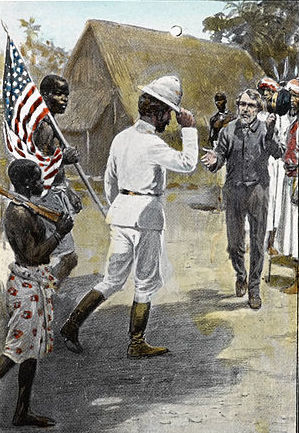
Henry Stanley introduces himself to Dr Livingstone

If you write your grant application in the way that I recommend, you should leave the introduction until last. The reason is that, by the time you start to write the introduction, you will already have written everything you need to say in it. You just need to copy it and paste it into the right place.

Here’s how it works. There are five things that you need to say in the introduction to a grant application,

  • what you will do,
  • why it is important,
  • your research aims,
  • your research objectives, and
  • what you will do with the results.

1. What you will do

Your first sentence should say what the outcome of your research project will be. Ideally it will also say something about how you will go about producing this outcome and give a hint of your credentials for doing it.  If you followed the advice in my last post then you will already have written the perfect sentence to do this, key sentence 1. You can just copy and paste it to the beginning of the introduction.

2. Why it is important

Your next sentence should say why the outcome is important. It will do this with reference to an important research question. My last post described how to write this sentence, key sentence 2, introducing one of the sub-sections of the background section. You should copy it and paste it into the introduction.

3. Your research aims

Next you need to state how the outcome of the project depends on about three things that we need to know.  My last post explained how to state this in 3 sentences (key sentences 3, 4 and 5). You should copy and paste these from their positions in the background section of the case for support into the introduction. At this point you may wish to edit the sentences so that you can run them together as a list of aims. Whatever editing you do you should avoid changing any of the technical phrases for reasons I will explain below.

4. Your research objectives

Then you need to say that the research project will tell us each of the three things that we need to know. If you followed the advice I gave a couple of weeks ago or earlier, you will have put four sentences that do precisely this at strategic points in the description of your research project. They are key sentences 6, 7, 8 and 9; copy them and paste them into the introduction.

5. What you will do with the results

Finally you need to say what you will do with the results. You will already have written key sentence 10, which says exactly this and introduces the last part of the description of the project. Copy  it and paste it into the introduction.

Exact repetition of the key sentences increases your chances of getting funded

When you copy and paste the key sentences you should keep the phrases that refer to your research activities exactly the same. It’s OK to change the structure, as long as you keep the parts that refer to research activities exactly the same. For example you might change three sentences saying “We need to know X.”; “We need to understand  Y”; and “We need to  characterise Z” to a list of aims, such as “Our aims are:- to discover X; to understand Y; and to characterise Z”. But you should not change the phrases X, Y and Z or the verbs discover, understand and characterise. 

One reason that you should not change phrases when you repeat is that to do so would be a stylistic error known as  elegant variation. However, there is an important practical reason that exact repetition is good.

The value of exact repetition comes from the way that a grants committee deals with applications. One or two members of the committee have to read each application and explain it to the rest of the committee. Usually they do this by stating  what you will do, why it is important, your research aims, your research objectives, and what you will do with the results. This is quite a difficult thing to do because they will not have had much time to read the proposal and they will have to present several other grant applications the same day: I once had to present 10 applications in a single meeting.

Anything that you can do to make the job of presenting your grant to the committee easier will be welcome. If you write the introduction the way I have suggested, it will be the perfect set of notes for the presentation. What could be better than that?

I frequently encounter  academics who feel that you should change the words when you repeat a message even though the meaning is exactly the same. I encounter two arguments for this.

  • The first argument is that the reader will get bored if they see the same phrase twice. This is not so. For the most important readers the repetition is a useful and reassuring signal.  The members of the committee that decides whether to fund your grant are unlikely to be familiar with the details of your research area and may not completely understand the phrases. Repeating the phrases exactly helps them to see that you are saying the same thing again. To say the same thing with different words is very risky indeed. The most likely outcome is that they will think you are saying two different things.
  • The second argument – which usually follows immediately I give the explanation in the previous paragraph – is that by using different ways of saying the same thing, you increase the chance that the reader will understand at least once. Even if it’s true, it’s no help for the reader to understand once because they will still think that when you repeat the sentence with different words that you are saying something different. It is far better to use exactly the same words because you increase the chance that the reader will remember the phrase, and even if they don’t understand it they may think that they do.

Can your grant application stand up on its own?

13550103_sThis is the third in a series of posts explaining how to edit your grant application into the right shape. In order to stand up a grant application should consist of three sections that are shaped to support each other. They are:-

  • An introduction that prepares the reader for the points the other two sections are going to make. It is less than 20% of the total.
  • A background that convinces the reader that the world needs the results that your project will deliver. It is less than 30% of the total.
  • A description of the project that makes it clear that your project will deliver the results that are needed. It is at least 50% of the total.

If you have followed the advice in my last post you will have done the most important part. The second half of your application will be a description of your research project in five or six subsections. The subsections are introduced by matched key sentences that say what your project will produce and what you will do with the results. The sub-section that follows each key sentence adds the detail that will convince the reader that your project will deliver what the key sentence promises. Now you have to write a background section that sells the promises.

The shape and content of the background section are dictated by the description of the project. This follows from the fact that the function of the background is to sell the project. Obviously it should sell everything your project will deliver. Equally obviously it shouldn’t waste time or space by selling anything else.

So if you are editing the background to support such a description, the first thing to do is to create the sub-sections it needs by drafting the key sentences that introduce them. You need the following sub-sections:-

  • A sub-section that states the overall outcome of the project in a way that makes it clear that it is exciting and that stakes your claim to carry it out. This is introduced by the first key sentence, which ideally states the overall outcome of the project, links it to an important research question and to a distinctive claim for competence. The sentence says “This project will do X, which will (partially) solve huge research problem Y, by using technique Z, developed by our group.” For example “This project will develop a potential treatment for Alzheimer’s disease by testing the efficacy of a plaque-dissolving molecule, which our group has discovered, in a mouse model of the disease”. The subsection prepares the reader for the “we need to know” subsections which are preceded by the “importance” subsection.
  • A subsection that discusses the importance of the problem and of the contribution that your project will make to its solution. This subsection is introduced by a key sentence about the importance of the problem and of your project and has two functions. First it is like a funnel for the importance of the question. If you have picked a problem that is big enough to be exciting then it is unlikely that a single project will solve it completely. Everybody knows that. But everybody needs to be convinced that what you will do will be an important step towards a solution. So you need to help the reader to see that the piece of the problem addressed by your project is important. The second function is that it creates the need for whatever you will do to disseminate your results. For example, if your project promises to discover a cure for a disease then the dissemination plan needs to address the question of making the cure available to those afflicted by the disease.
  • A “we need to know” subsection for each of your sub-projects that explains why (and how much) we need the knowledge that sub-project will produce. Drafting key sentences for these sub-projects is very very easy. The first draft is “We need to know XXX” where XXX is the knowledge that the sub-project will produce.

Once you have created these  subsections and introduced them with the key sentences, you can copy over text from your old draft and write new text so that each sub-section explains, with reference to relevant evidence, why the key sentence that introduces it is completely and compellingly true. That makes the background the perfect preparation for the description of the project: it convinces the reader that we desperately need everything that the project will deliver.

All that you need now is an introduction. The perfect introduction is very simple to describe but it takes a bit of time to explain exactly why it should be so simple. I will tell you about it next week.

Reshape Your Draft Grant Application

20005338_sLast week I explained how to tell if your grant application is misshapen. This post is about how to get it into shape.

Let’s start with the most difficult kind of draft to deal with, one in which it’s hard to tell the shape of the proposal because it’s written in such a way that you can’t tell what a paragraph is about until you have analysed its meaning. Last week I described this kind of writing as zombie text.

The first step with zombie text  is to identify the topic of each paragraph. The next step is the same with zombie text and with text where the paragraph starts with the topic. It is to find the best grouping of paragraphs into larger subsections.

Dealing with Zombie Text

The first step with zombie text is to use the reverse outlining  procedure described on @thesiswhisperer’s blog about the zombie thesis to identify the paragraph topics. There is another description of reverse outlining on @explorstlye’s blog, Explorations of Style.

  1. Number the paragraphs in your draft. Open a new document, give it a different title and copy the whole text of your draft into it.
  2. Replace each paragraph in the new document with a single short sentence that states its point. Keep the numbering so that you can copy across the remaining text from the original document when you need to.
    • If you can’t state the point of a paragraph with a single sentence then you probably need to revise your approach to paragraphs. There is good advice in the explorations of style blog and in lots of other places on the web. For this exercise just split the paragraphs into smaller chunks that canbe summarised with a single sentence and give them compound numbers (2.1, 2.2 etc).

If your draft is written so that the first sentence of each paragraph states the topic of the paragraph then you simply number the paragraphs and create a new document containing just the first sentence of each paragraph, still numbered.

In the reverse outlining process you rearrange the order of the topic sentences until you find the best structure for your document. With grant applications we already know what the best structure is, so the task is to arrange the text in that structure. We start with the largest component of the case for support, the description of the project.

Description of the project: key sentences and topic sentences

The next step is to sort the topic sentences of the paragraphs on the research project into five or six sections. In order to do this you will need to have worked out the main details of your research project. At the very least you will have divided the project into three or four sub-projects and you will know what outcome each sub-project will produce.

ZombieGrantWarningIf you haven’t done this then I am afraid I have bad news. This post will not help you: you have a zombie grant. There is no point in rewriting it until you have designed a project.

I’m sorry if this is disappointing but I can’t change the facts of life. The best I can do is to help you deal with them. A grant application is a marketing document for a research project. Without a research project, it can never be more than an empty shell, a zombie.

The best help I can offer is to say that the text you have written may be useful but you need to design a project  in order to use it. This post tells you how to design and catalogue sub-projects and  this post tells you how to check whether a particular group of sub-projects makes a viable project. I will deal more specifically with zombie grants in a future post.

So, if you have a potentially viable grant application you need to sort the topic sentences into five or six sub-sections as follows:-

  • a general introductory section,
  • three or four sections describing the specific sub-projects, and
  • a section saying what you will do with the overall results of the project.

You should now select, or draft, a key sentence that will be the first sentence for each of these five or six sections.  This post tells you how but here’s a rough outline.

  • The key sentence for each sub-project should say something about what the research activities are in the sub-project and it should say what they will discover or what the outcome will be. It has the form [Very brief descripton of research activities in the subproject] will [show, discover, reveal, or other suitable verb] [whatever the outcome of the research in that sub-project will be]. If you have written such a sentence, by all means use it, but if you haven’t, you need to write it now.
    • As you write each of these key sentences you should write a corresponding key sentence for the background to the project and paste it into the corresponding sub-section of the background of the case for support. This sentence states that we need to know whatever the corresponding sub-project will discover. The general form is We need to  know [or discover, understand or similar verb] [the outcome of the research in the corresponding sub-project].
  • The key sentence for the introductory sub-section on the research project as a whole should say what kind of research it will involve, something about the facilities it will use – especially if these are distinctive in some way, and what it will discover.
  • The key sentence for the sub-section on what you will do with the overall results may be about publication or about dissemination or exploitation of the results in some other way.

Once you have the key sentences in place you should copy each numbered topic sentence into the section where it fits best. Then arrange them in the best possible order. Now you are ready for the detail.

Final shaping of the description of the project

Once you have the topic sentences in the right order you  should take text from the body of each original paragraph and edit it so that the paragraphs flow internally and from one to the next. The introductory subsection should contain a description of your general research approach together with any necessary preliminaries. The sub-sections corresponding to the sub-projects should contain  a coherent description of your intended research activities that makes it clear how they will lead to the result mentioned in the introductory key sentence.

This is the point at which you adjust the length. Remember, the full description of the project should be at least 50% of the case for support. If it is more than about 65% then you either have too much detail or too big a project. Keep adjusting and trimming until you have a description of your research project that is the right size.

The next step is to produce a background section that convinces the reader that we need to know what your research project will discover. You already have key sentences that  define three or four of its five or six subsections. I will tell you how to produce the rest of it next week.


Is your grant application a misshapen monster?

Nuke_fishWhat do you do when your grant application (or your colleague’s) turns out to be a misshapen monster? How do you even know if it has? Can you tell if it’s just a little bit deformed? Read on. This post is about how to test whether your case for support is the right size and shape. Size and shape go together for three reasons.

  • If your grant is a monster then it’s probably misshapen too.
  • Even if it’s a perfectly formed monster, you will need to cut lumps out of it to get it down to size, so you need to check that the cutting doesn’t destroy the shape.
  • If it’s the right size but the wrong shape then you will probably need to cut some parts and grow others.

Incidentally, if you think that the solution to an overlong case for support is to shrink the margins and the font size I have no argument with you. None whatsoever. But you are reading the wrong blog. This blog is about grant-writing. Here are some blogs about typography.

Gross malformations: missing parts

The easiest malformation to spot is if one of the parts of the case for support is missing or the wrong size. In the research funding toolkit book we make the point that a generic case for support has three components.

  • An introduction that very quickly states the main objective of the project, why it is important, the aims, the objectives, and what will be done with the results. This should be less than 20% of the total. The commonest mistake is to omit it completely. Less commonly it is so big that it unbalances the case for support.
  • A background section that makes the reader feel that it is important to do the research in the project by showing how the aims contribute to a big important question. This part should be no more than than 30% of the total. It’s fairly common for it to be hypertrophied – and hideously deformed by philosophical quotations, particularly when people start by writing about the question they want to answer rather than describing the project that they want to do. I have seen a case for support that was 90% background.
  • The description of the research project, which describes the research in sufficient detail to convince the reader that the aims will be met. This should be at least 50% of the case for support. It is often too short and sketchy. It is rare for it to be too long except when the project itself is over ambitious.

Lesser malformations: malformed parts

The parts of the case for support must be the right shape as well as the right size if they are to work effectively. There are two major aspects to this.

  • The background must match the project. Each component of the project (there should be three or four such sub-projects) should have a corresponding sub-section of the background that makes the case that the outcome of that sub-project will meet one of the specific aims of the project. These sub-sections should be in the same order as their corresponding sub-sections in the description of the project and they should be preceded by one or two  sub-sections that explain the importance of the overall objective of the project and link it to the specific aims.
  • The statements in the introduction should be in the same order as the subsections of the background and description of the project to which they correspond. The introduction sketches a picture of the case for support and the other two sections fill in the detail.

The Zombie Grant

If you have generated your draft without thinking too much about structure and particularly if, like most academics, you tend to write statements as conclusions, rather than as assertions to be explained and justified, it may actually be pretty hard to work out what each section of the text does. If you are in this situation your draft is the research grant equivalent of what Inger Mewburn, Director of Research Training at the Australian National University  (AKA @thesiswhisperer), calls the zombie thesis. Let’s call it a zombie grant.

I have explained that you can avoid writing a zombie grant by writing key sentences and using them to impose structure on your draft.  But once you have it, you need to take drastic action to avoid getting sucked into a quagmire. As @thesiswhisperer says says “The worst thing to do with a Zombie Thesis is to do a line by line edit. This is like trying to fight a jungle war – you will find yourself hip deep in mud somewhere, with a sucking chest wound, too far for a helicopter to reach.”

To revive a zombie thesis @thesiswhisperer recommends a rebuilding process based on reverse outlining, which is explained in this blog post. To revive a zombie grant you need a combination of reverse outlining and retro-fitting key sentences which I will explain next week.